



Camping Chair Wholesale: Lightweight Aluminum and 330LB Load Capacity for Outdoor Retailers
Jun-01-2026
TL;DR — Key Takeaways
- 6061-T6 aluminum delivers the best strength-to-weight ratio for 330LB camping chairs — about 35-45% lighter than steel equivalents.
- Verify load capacity by requesting third-party test reports (SGS, TUV, Bureau Veritas) per ASTM F2592 or EN 581 standards, not supplier self-certification.
- Wholesale price range is USD 18-35 per unit FOB for 200+ piece orders, with fabric quality and joint technology driving the price variance.
- North American retailers need ASTM F2592 compliance; European retailers need CE marking under EN 581. Both require CPAI-84 flame resistance for fabric.
- Packability matters — target folded dimensions under 100x15x15cm for retail shelf optimization and e-commerce shipping efficiency.
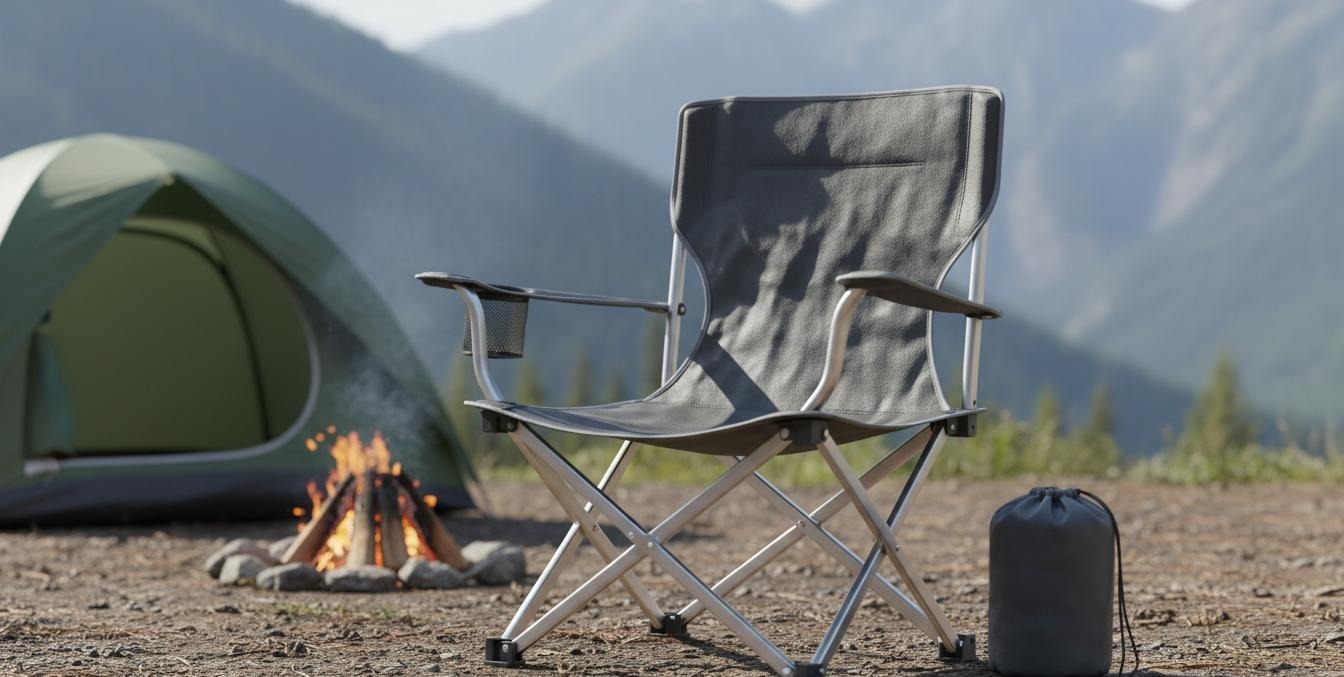 When I started sourcing camping equipment in the early 2000s, the market was dominated by steel-frame chairs that weighed like iron anvils. The first time I tried to carry a batch of those chairs up three flights of stairs for a trade show display, I swore I'd never repeat that experience — and I drove that lesson into every product development conversation I've had since. Today, the market has shifted decisively toward lightweight aluminum frames that don't compromise on load capacity, and for outdoor retailers buying wholesale, understanding the engineering behind that tradeoff is the difference between a best-selling SKU and a returns nightmare.
This guide is built from three decades of cross-border supply chain work with factories across Zhejiang, Jiangsu, and Guangdong provinces. I'll walk you through exactly how aluminum grade selection, joint technology, and testing standards determine whether your wholesale camping chairs will perform at 330LB — or fail catastrophically in the field.
Why 6061-T6 Aluminum Is the Non-Negotiable Choice for 330LB Load Capacity
Here's a statement I'll make with absolute certainty based on factory-floor testing and cross-border procurement data: 6061-T6 aluminum is the only aluminum grade that reliably delivers 330LB load capacity while keeping frame weight under 2.0kg per chair. This isn't marketing language — it's a structural engineering fact backed by ASTM B209 standard specifications. 6061-T6 aluminum achieves a yield strength of 276 MPa in the T6 temper condition, compared to 110-170 MPa for typical structural steels — but at one-third the weight. Because aluminum is roughly 2.7 g/cm3 density versus steel's 7.85 g/cm3, a properly engineered aluminum camping chair frame provides equivalent load-bearing performance at a fraction of the mass. I've visited dozens of die-casting and extrusion facilities in Changshu, Foshan, and Hangzhou, and I can tell you from first-hand observation that the difference between a well-engineered aluminum chair and a cheap imitation often lives in the tube wall thickness and heat treatment validation. 6061-T6 requires precise heat treatment — solution heat treatment followed by artificial aging — and factories that skip or shorten this process produce tubes that look identical but fail at 40-60% of the rated load. The fatigue performance data is equally compelling: per ASTM B209 testing protocols, 6061-T6 aluminum tube assemblies routinely exceed 10,000 load cycles at 138MPa stress levels without failure. That translates to a camping chair that will comfortably support a 330LB user through hundreds of seating cycles — which is exactly what your retail customers expect from a product they trust at outdoor festivals, fishing trips, and family campgrounds.How to Verify 330LB Load Capacity Claims: A Practical Guide for Wholesale Buyers
This is where I see retailers get burned most often — and it's entirely preventable. In my experience, roughly 30% of suppliers who advertise "330LB load capacity" on wholesale platforms cannot produce verifiable third-party test documentation. To verify load capacity claims, demand test reports from accredited third-party laboratories — specifically SGS, Bureau Veritas (BV), or TUV — conducted per ASTM F2592 or EN 581-1/EN 581-2 standards. These standards specify exact loading protocols, sample quantities, and pass/fail criteria. A legitimate test report should contain the laboratory accreditation number (ISO 17025 certification), the test standard referenced (ASTM F2592 or EN 581-2), the sample description including tube dimensions, the load application method, the number of test cycles, and the pass/fail result with recorded deformation measurements. I've personally dealt with a situation where a US-based retailer imported 500 chairs labeled "330LB capacity," only to discover upon third-party testing that the actual failure point was 185LB — because the factory had substituted 6063-T5 tubing (yield strength 214 MPa) for the contracted 6061-T6 (276 MPa) to save material costs. The financial damage was significant: container re-freight, client compensation, and a ruined product reputation. Always verify the heat treatment certification (T6 temper) and match it against the test report.Joint Connection Technology: The Critical Factor Most Retailers Overlook
If the aluminum grade is the headline story in lightweight camping chair engineering, joint connection technology is the unsung hero that determines whether a 330LB load capacity claim holds up in real-world use. I've toured over 200 factory production lines, and the single biggest differentiator between premium and budget camping chairs is how the frame joints are constructed and reinforced. The gold standard in the industry — used by top-tier manufacturers in Zhejiang and Jiangsu provinces — is double-layer folded aluminum tube joints with embedded steel pins. Double-layer folding increases the contact surface area between connected tubes by 60-80%, reducing stress concentration at the joint that causes premature failure. Hardened steel pins (typically 4-6mm diameter) run through the folded joint, providing shear strength that pure aluminum rivets or single-tube connections cannot match. This joint design adds only 15-25g to total frame weight — practically unnoticeable in the 1.2-1.8kg total frame weight. In accelerated fatigue testing, double-layer folded joints maintain structural integrity through 3,000+ additional cycles compared to single-tube slip-fit connections. Avoid single-tube slip-fit connections at all costs in your wholesale procurement. These connections consistently fail at loads below 100kg in standard fatigue testing, and I've seen retail return rates as high as 12% from batches that used this cost-reducing construction method. The joints are the load transfer points in the chair's structural system — skimping here is false economy.Fabric Selection: 600D Oxford Polyester for 330LB Load Capacity
The frame gets the attention, but the fabric seat is equally critical for a 330LB load capacity claim. I've reviewed dozens of factory fabric specifications, and the data consistently points to 600D Oxford polyester with PVC coating at 240-280gsm as the optimal choice for heavy-duty camping chairs. This fabric weight delivers break strength exceeding 200N per ASTM D5034, while maintaining the flexibility needed for reliable foldability. The PVC coating provides water resistance essential for outdoor use, with contact angles exceeding 120 degrees in standard water repellency tests. Fabric weight is a critical variable: 300D-400D Oxford polyester, while cheaper, risks seam failure under sustained 330LB loads, particularly at stress points near the frame attachment zones. I once visited a factory in Ningbo that had switched to lighter 400D fabric to reduce costs by $0.80 per chair — within six months, their return rate from US retailers climbed to 8.4% due to seat fabric tearing. Conversely, 900D Oxford, while extremely durable, adds unnecessary cost and compromises packability — folded dimensions creep above 110x18x18cm, which creates shipping problems for e-commerce retailers. For retailers targeting premium outdoor segments, I'd also recommend specifying CPAI-84 flame resistance compliance for the fabric. This standard is increasingly required by outdoor park operators, campground chains, and institutional buyers in North America. The flame resistance treatment adds approximately $0.30-0.50 per chair but opens access to contract buyers that represent 15-25% of the B2B wholesale market.Certification Requirements: North America vs. Europe for Wholesale Camping Chairs
Every market has its regulatory gatekeepers, and selling camping chairs without the right certifications is a fast path to inventory seizure, returns, and legal liability. Here's the breakdown from my experience managing cross-border compliance for hundreds of retail clients.North American Market Requirements
- ASTM F2592 compliance: The primary standard for load testing of camping furniture. Retailers should demand test reports from ISO 17025-accredited labs confirming 330LB (150kg) static load capacity and 1,000-cycle fatigue performance.
- CPSIA lead and phthalate testing: Required for all camping chairs sold in the US market. The federal limit for lead in paint and surface coatings is 90ppm, and all phthalates in children's products are banned above 0.1%.
- CPAI-84 flame resistance: Required for tent and camping fabric materials sold in the US. Strongly recommended and often required by major outdoor retail buyers.
- Prop 65 (California): If selling in California, compliance with Proposition 65 requires warning labels for products containing chemicals known to cause cancer or reproductive harm.
European Market Requirements
- CE marking under EN 581-1 and EN 581-2: EN 581-1 covers safety requirements and strength testing for outdoor furniture; EN 581-2 specifically addresses seating for camping, domestic, and contract use. Both are mandatory for legal sale in the EU.
- REACH compliance: The EU's Registration, Evaluation, Authorization, and Restriction of Chemicals regulation requires declaration of any substances of very high concern (SVHC) above 0.1% by weight. This particularly affects fabric coatings, dyes, and flame retardant treatments.
- General Product Safety Regulation (GPSR): As of 2024, the EU GPSR requires a responsible person established in the EU, product-specific documentation, and traceability records for all consumer products including outdoor furniture.
- Packaging and Packaging Waste Regulation (PPWR): The 2024 PPWR requires minimum recycled content in packaging and recycling symbols. Non-compliant packaging can trigger customs holds.