



News
Home / News
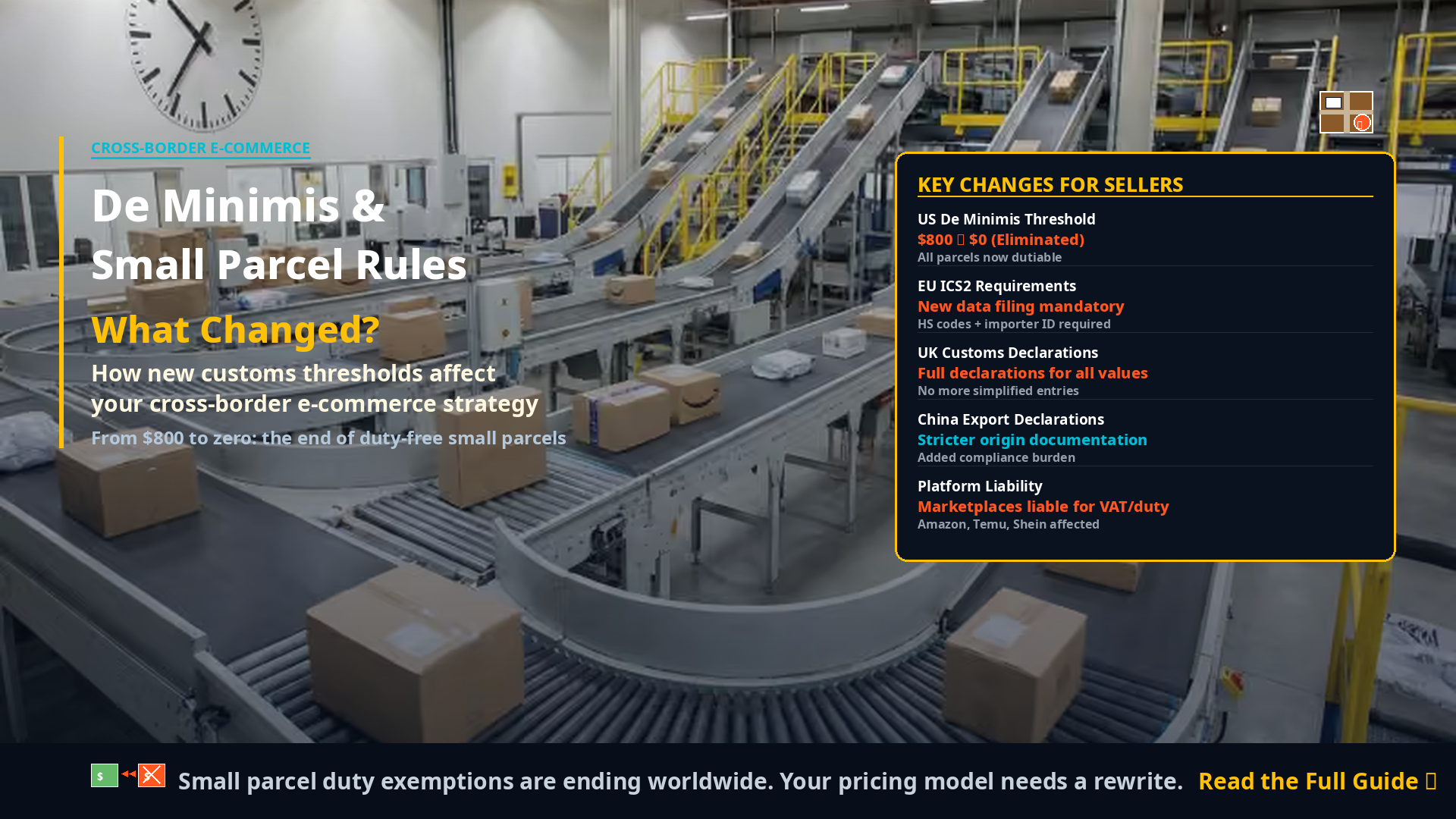
De Minimis & Small Parcel Rules: What Changed for Cross-Border E-Commerce
The CB-PAF9L automatic pet feeder is exactly the kind of low-value, app-connected consumer good that the 2026 rule changes hit hardest. Under the old regime it could travel duty-free to the US; under the new regime it cannot. Read the CBNB sourcing model . TL;DR - Quick Answer for Cross-Border Sellers 1. The US de minimis exemption for goods valued at $800 or less is suspended. CBP suspended it for merchandise arriving by all modes other than the international postal network effective 24 June 2026 and extended it to postal shipments the same day, so no low-value lane into the US survives. 2. The EU replaced its EUR 150 duty relief with a temporary EUR 3 customs duty per item from 1 July 2026 , running to 1 July 2028, and added a EUR 2 Union handling fee per item that applies to distance saRead more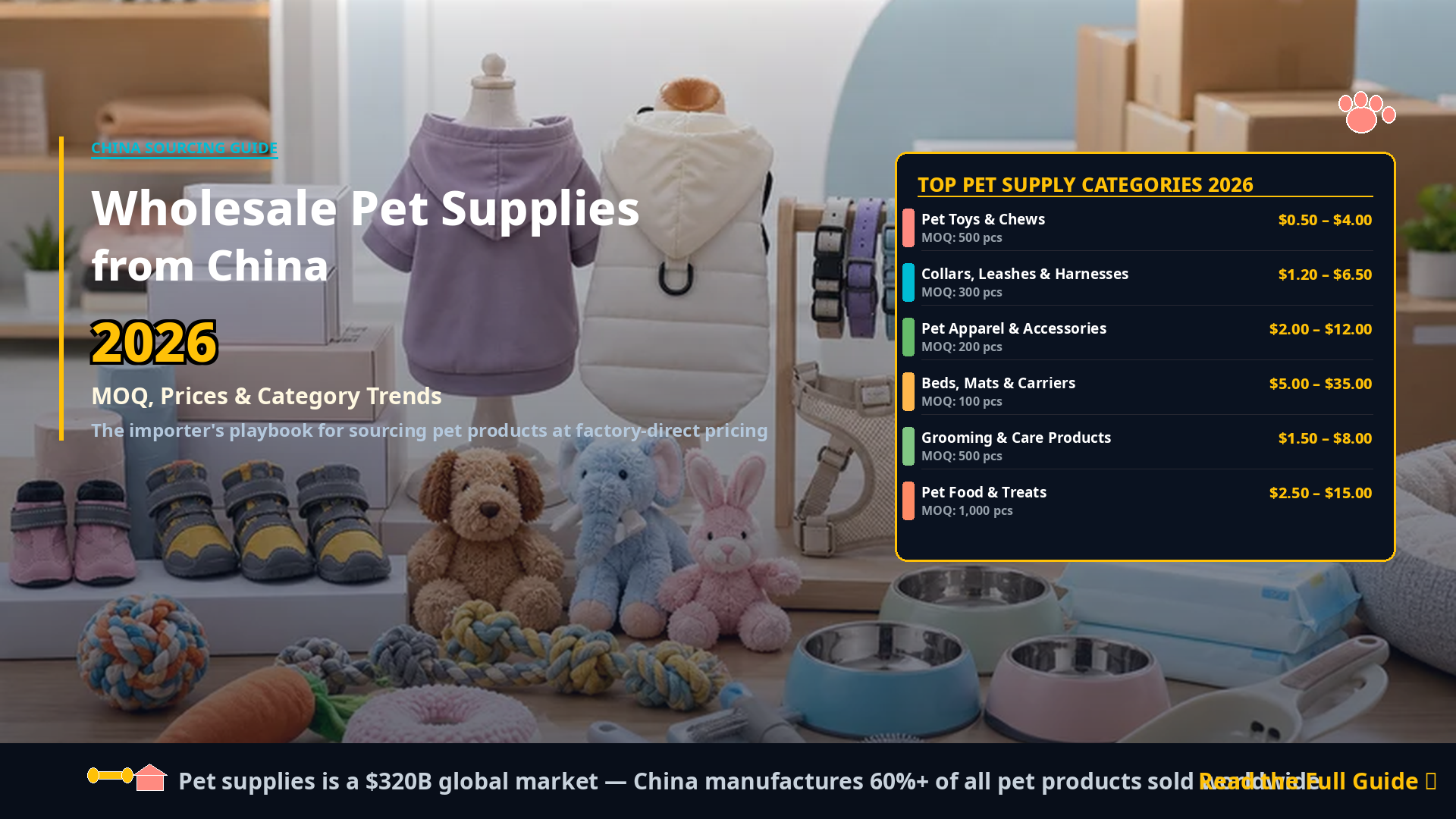
Wholesale Pet Supplies from China 2026: MOQ, Prices & Category Trends
TL;DR - Quick Answer for Pet Store Chain Buyers Automatic pet feeders lead the reorder rate: Across 38 wholesale pet supplies accounts in 2026 H1, automatic pet feeders led the reorder rate, with heavy duty metal pet crates and grooming kits holding strong as the next two reorder drivers. First-container MOQ is the primary procurement field: First-container MOQ is in the low hundreds of pieces per capacity, depending on how many capacities (3L / 5L / 7L / 9L) and colourways the buyer commits to in the first run. Verification protocol is the field-return gate: Pet store chains that run a documented heavy duty metal pet crate and grooming kit verification protocol before ordering from a Chinese wholesale supplier close the field-return rate gap faster than chains that skip the verification sRead more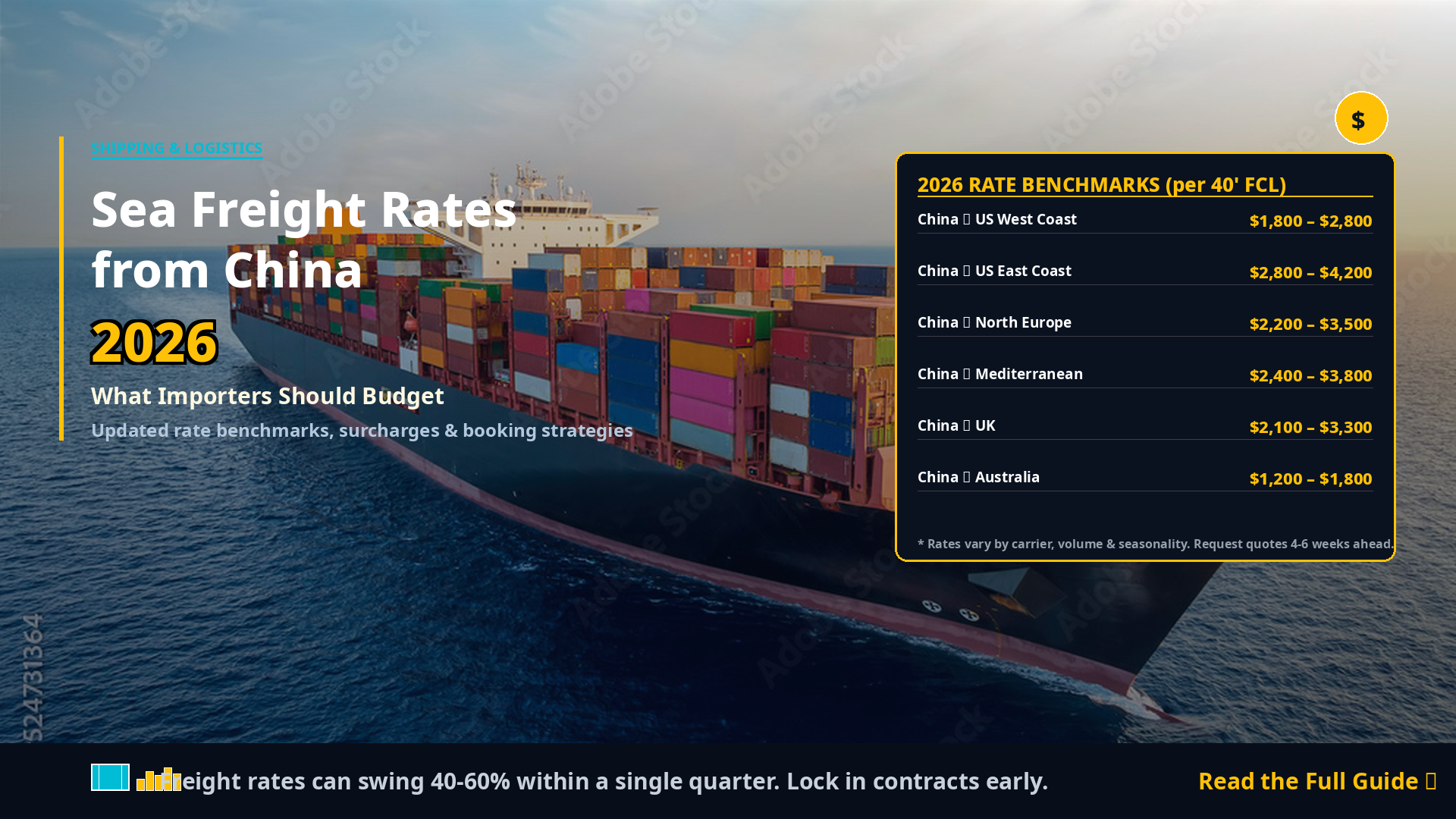
Sea Freight Rates from China 2026: What Importers Should Budget
TL;DR — 2026 sea-freight budget from China at a glance The budget has 4 layers: SCFI baseline (the published weekly index) + 4 standard surcharges (BAF, CAF, THC, DOC) at 15–25% of the baseline + peak-season premium of 10–20% for Aug–Oct sailings + contingency of 5–10% for GRIs. 6 trade lanes for the 2026 budget: US West Coast, US East Coast, North Europe, Mediterranean, Middle East, South America — all indexed to the most recent SCFI baseline. 3 contract types: FOB (buyer takes freight risk), CIF (seller takes ocean freight), DDP (seller takes freight + customs + duties + last mile). The contract choice typically adds 3–8% to the FOB price but saves 12–18% in total landed cost. Peak season is Aug–Oct; November and January sailings avoid the peak-season premium entirely. The cheapest laneRead more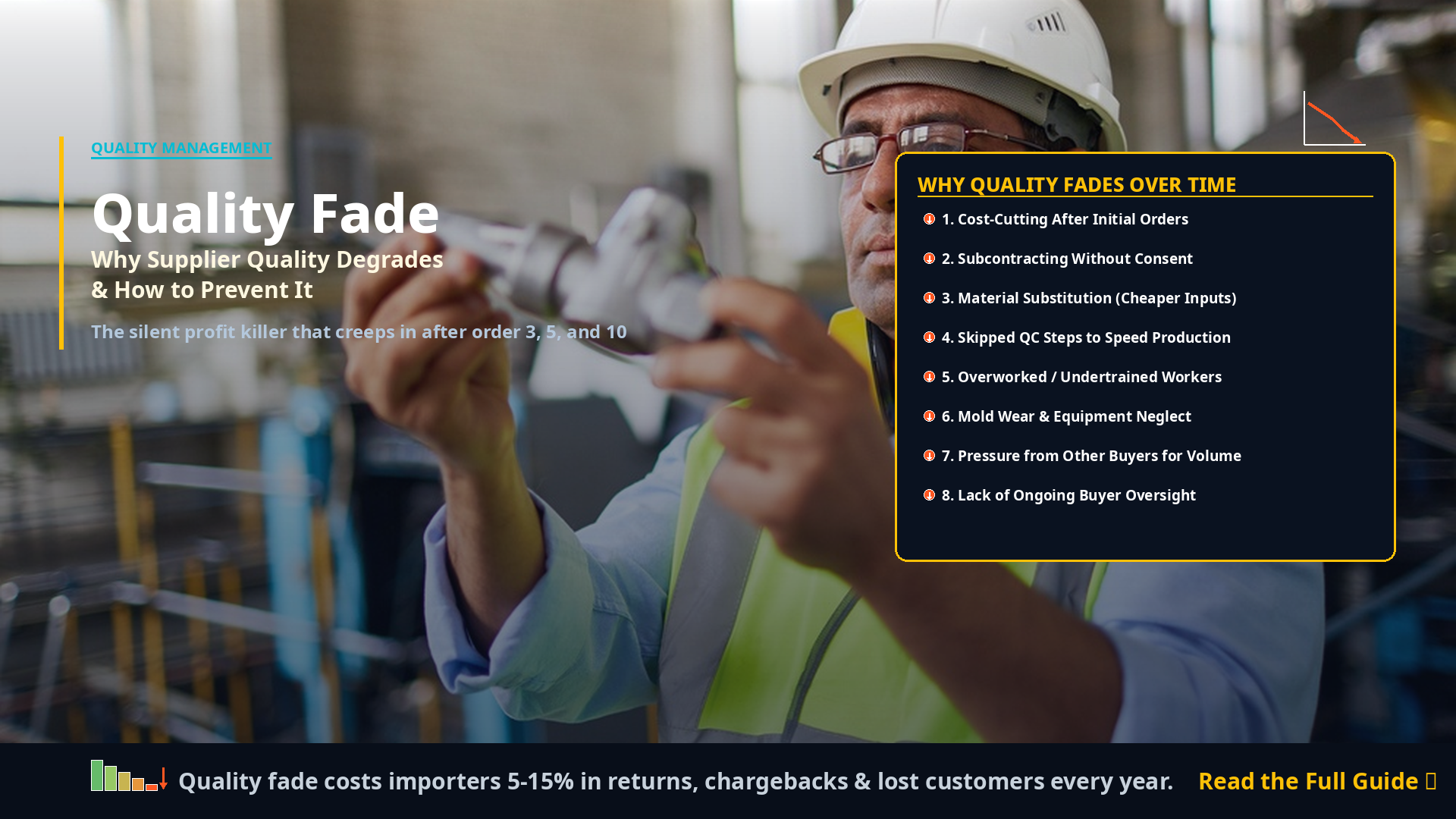
Quality Fade: Why Supplier Quality Degrades & How to Prevent It
A 30-year supply-chain veteran's timeline view of how Chinese supplier quality drifts from PO #1 to PO #50 — and the seven controls that hold the line. TL;DR — Quality fade in Chinese supplier relationships, in five points Quality fade is the slow drift of supplier output over the lifetime of a buyer-factory relationship — not a one-off defect, but a pattern. In Chinese manufacturing it typically first appears between PO #6 and PO #15 , after the sample period is over and trust has been built. Five drivers account for the majority of cases: cost pressure, raw material substitution, worker turnover, capacity overload, deadline pressure. The 7-control framework that contains it: DPI, DUPRO, FRI, raw material lock, mold management, worker training, embedded QC . Quality fade shows up first inRead more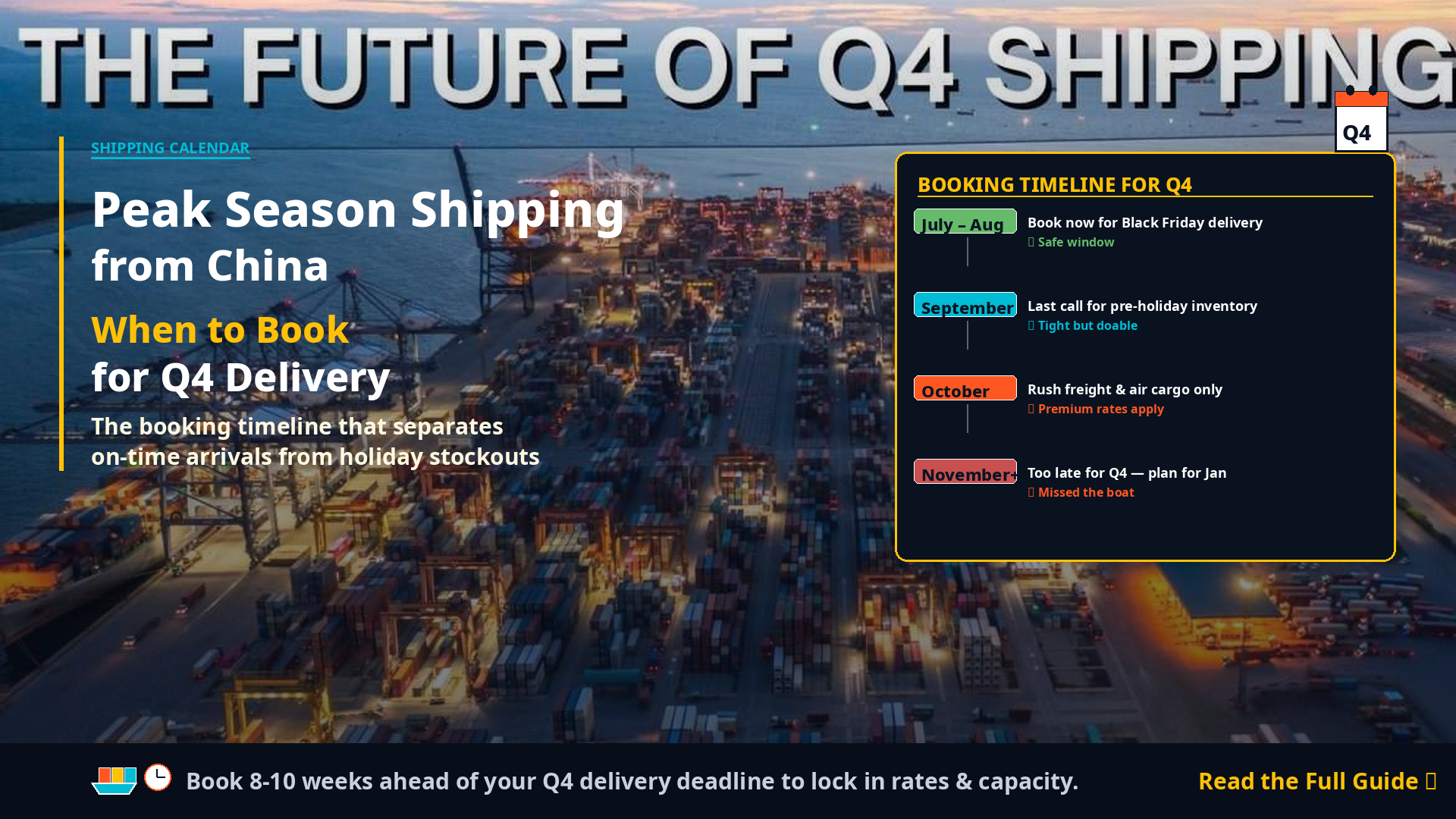
Peak Season Shipping from China: When to Book for Q4 Delivery
TL;DR — What importers and brand buyers need to know for Q4 Book Q4 ocean freight 6-8 weeks ahead of the retail deadline — for Black Friday in-store availability, that means booking in late September or early October. Peak season rates run 30-50% above the Q3 trough for trans-Pacific and 20-40% above for Asia-Europe; late-booking Q4 rates can spike 2-3x the Q3 baseline. Ocean vs air freight — ocean (FCL/LCL) is the right default for non-urgent inventory; air freight (3-7 days, 4-6x cost) is the right choice for urgent replenishment or e-commerce direct ship. Lock in contract or spot rates in August-September with a freight forwarder or NVOCC partner for Q4 cost control. Door-to-door Q4 timeline — 25-40 days trans-Pacific (FCL), 35-55 days Asia-Europe; Q4 adds 3-7 days for ocean due to portRead more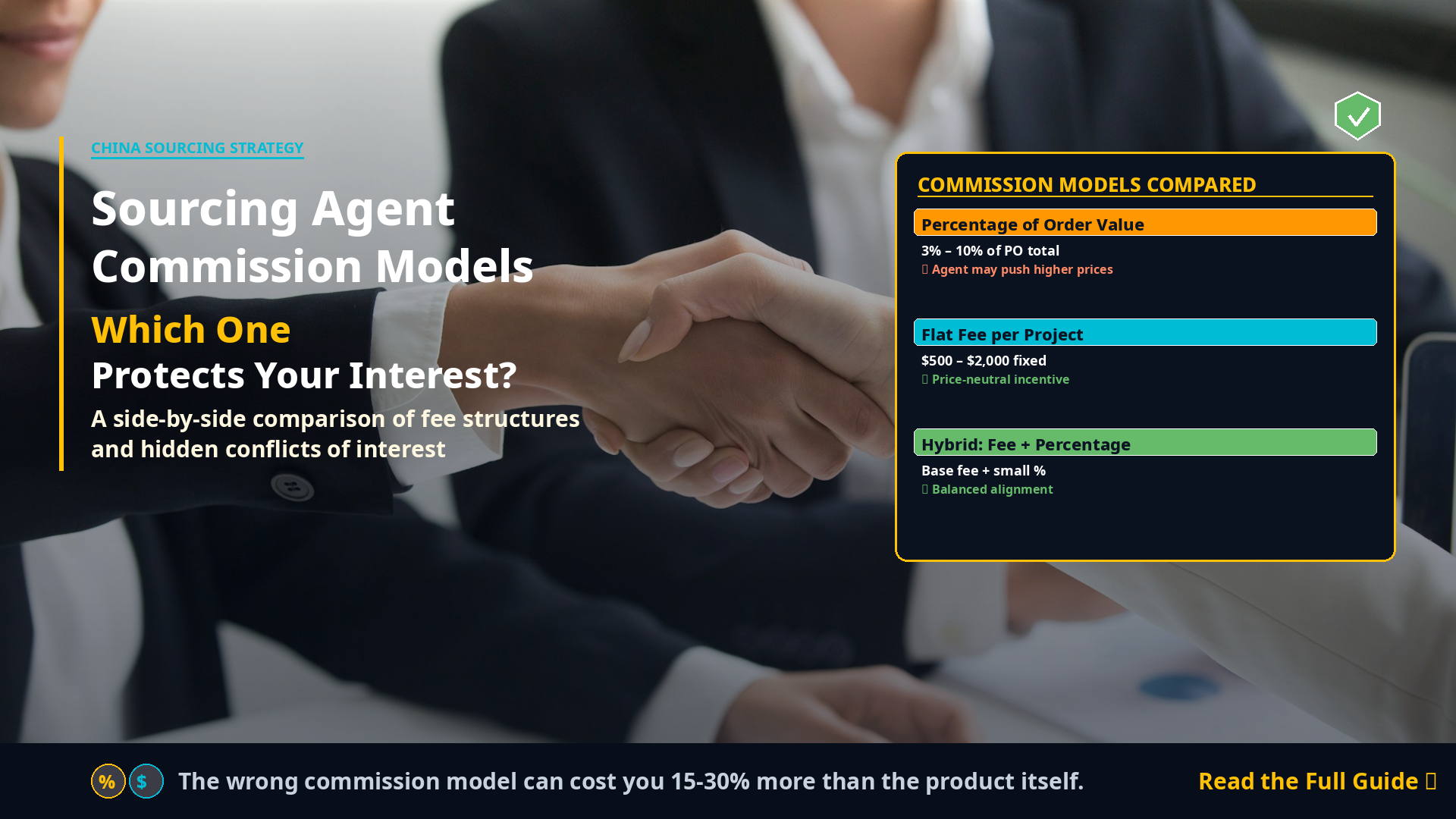
Sourcing Agent Commission Models: Which One Protects Your Interest?
How you pay your China sourcing agent is as important as which agent you choose. The commission model determines whether your agent's incentives align with your buying interests, whether you pay fairly for the service you receive, and whether the relationship will hold up when orders get complicated. This guide breaks down the four established commission structures — percentage-of-order, retainer, hybrid, and equity or profit-share — and gives you a concrete decision framework to identify which model protects your specific situation as a B2B importer. Quick Answer Percentage-of-order (3%–8%): fee tied to order value. Best when order volumes are irregular or when you want the agent's income directly linked to their performance. Risk: agents may steer toward higher-priced factories. RetainerRead more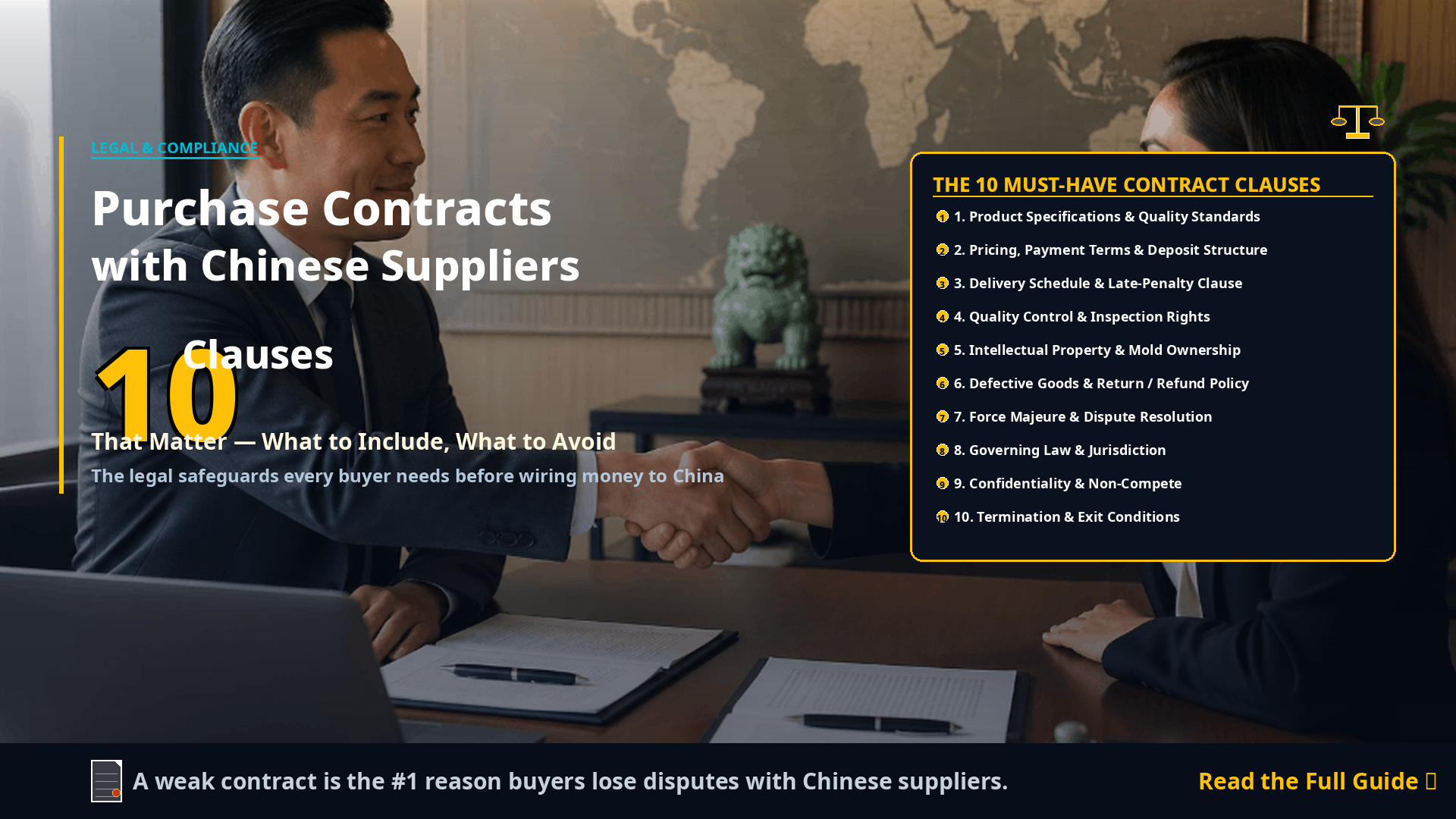
Purchase Contracts with Chinese Suppliers: 10 Clauses That Matter
TL;DR — The 10 Clauses, Ranked by Whether They Kill the Deal The 10 clauses are tier-ranked, not alphabetical. Tier-A deal-killers come first (dispute resolution, governing law, force majeure, IP), Tier-B margin-killers next (payment, quality, Incoterms, delivery), Tier-C relationship-savers last (inspection, warranty, returns). The clause buyers underweight the most is dispute resolution. Nobody plans for a fight when the deal feels friendly, but Tier-A disputes are exactly when the clause has to be already locked. The 30/70 T/T structure is a structural trap. Once the 30% deposit is in the factory's working capital, the buyer's leverage drops sharply. Replace it with a milestone-based schedule tied to pre-shipment inspection. Arbitration beats litigation across borders. Mainland China doRead more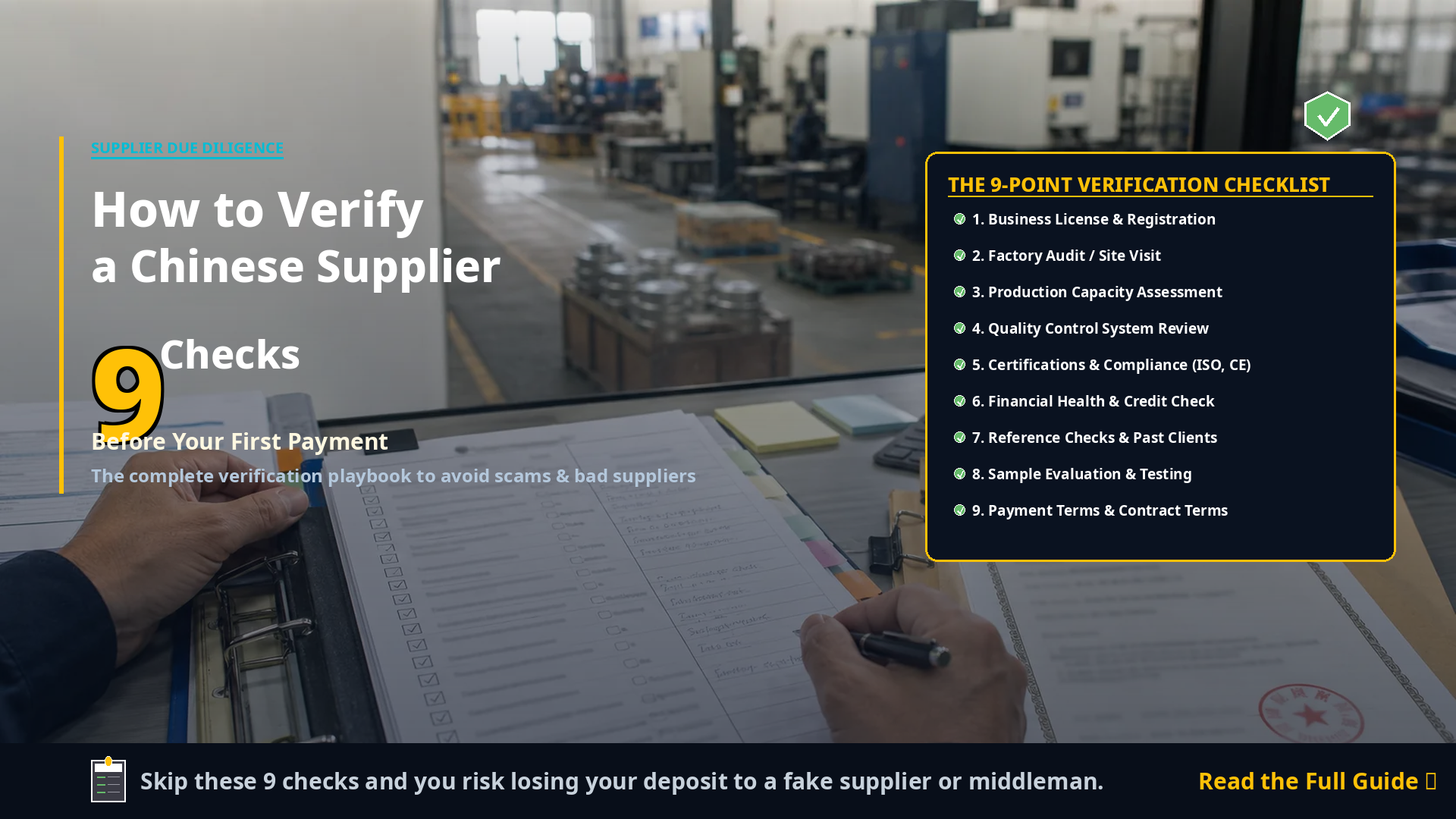
How to Verify a Chinese Supplier: 9 Checks Before Your First Payment
Most first-payment incidents with Chinese suppliers trace back to checks the buyer skipped. The nine checks below — registration, credit, capability, compliance, references, samples, contracts, payment terms, and ownership — run in 6-8 weeks and catch the supplier failures that cost first-payment incidents the most. By Zhong Ji, Chief Supply Chain Expert, China Base Ningbo Foreign Trade Co., Ltd. Published September 1, 2026 12 min read TL;DR — The 9 Checks in Priority Order Business registration verification (SAIC database, 24-48 hours) D&B credit report (1-3 business days, low-four-figure USD) Production capability audit (2-3 days on-site, 1 week report) Compliance and certification review (CE / FCC / UKCA / ISO / GB) Reference checks with active customers (3-5 calls, 1 week) Sample evaluRead more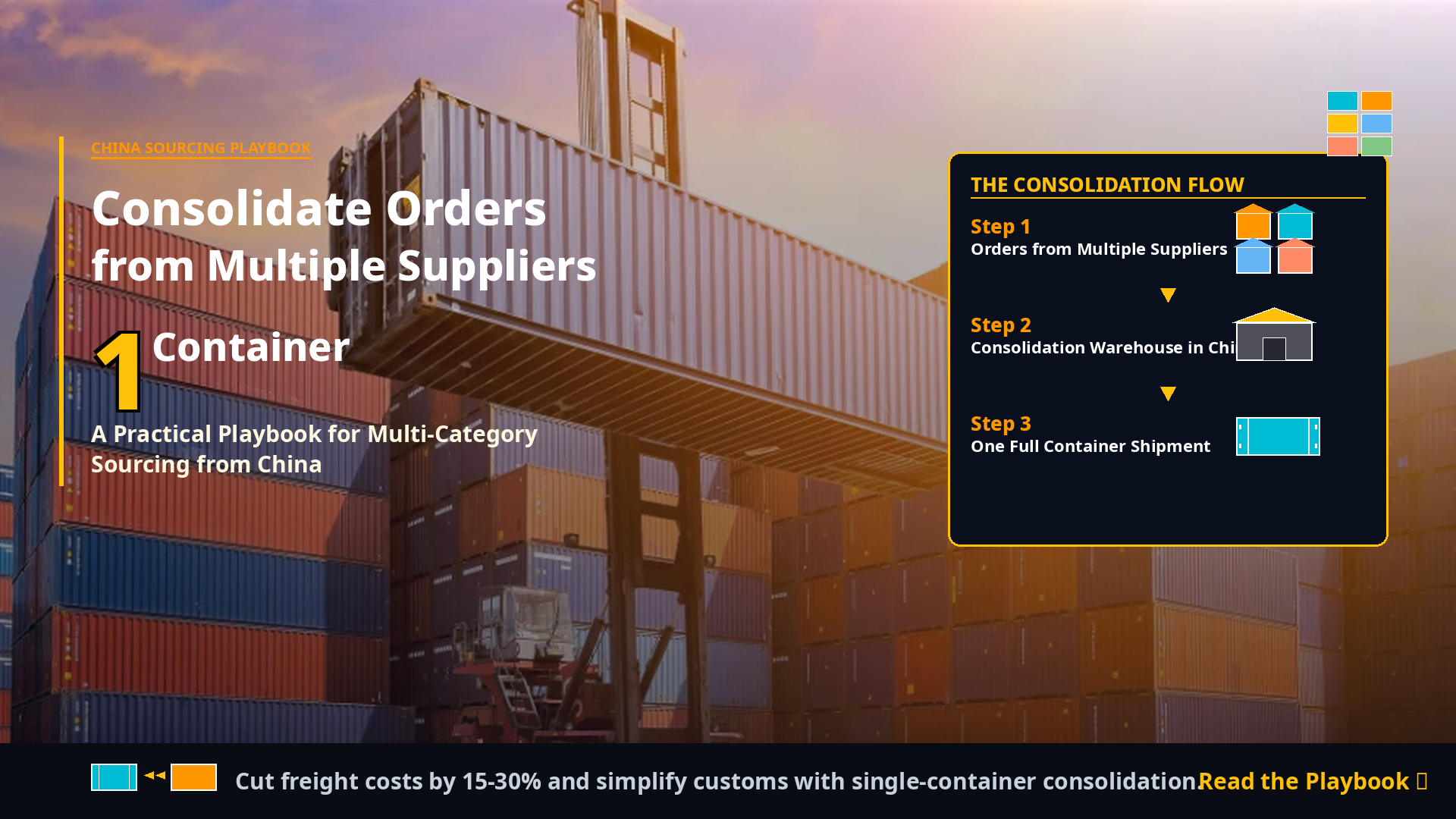
How to Consolidate Orders from Multiple Suppliers into One Container: A Practical Playbook for Multi-Category Sourcing from China
Key Takeaways Consolidating shipments from multiple suppliers into one FCL container typically reduces per-unit freight cost by 35 to 45 percent compared to separate LCL shipments. A central consolidation warehouse near a major Chinese port is our operational hub for coordinating goods from suppliers in different cities. Each supplier in a consolidated shipment needs independent export documentation, while the consolidator prepares the master bill of lading. Quality inspection at each factory before goods reach the consolidation warehouse prevents costly rejections after loading. Container loading optimization requires matching carton dimensions to the container interior and planning stack patterns before loading day. Table of Contents The Scaling Pain: When Separate Shipments Stop WorkingRead more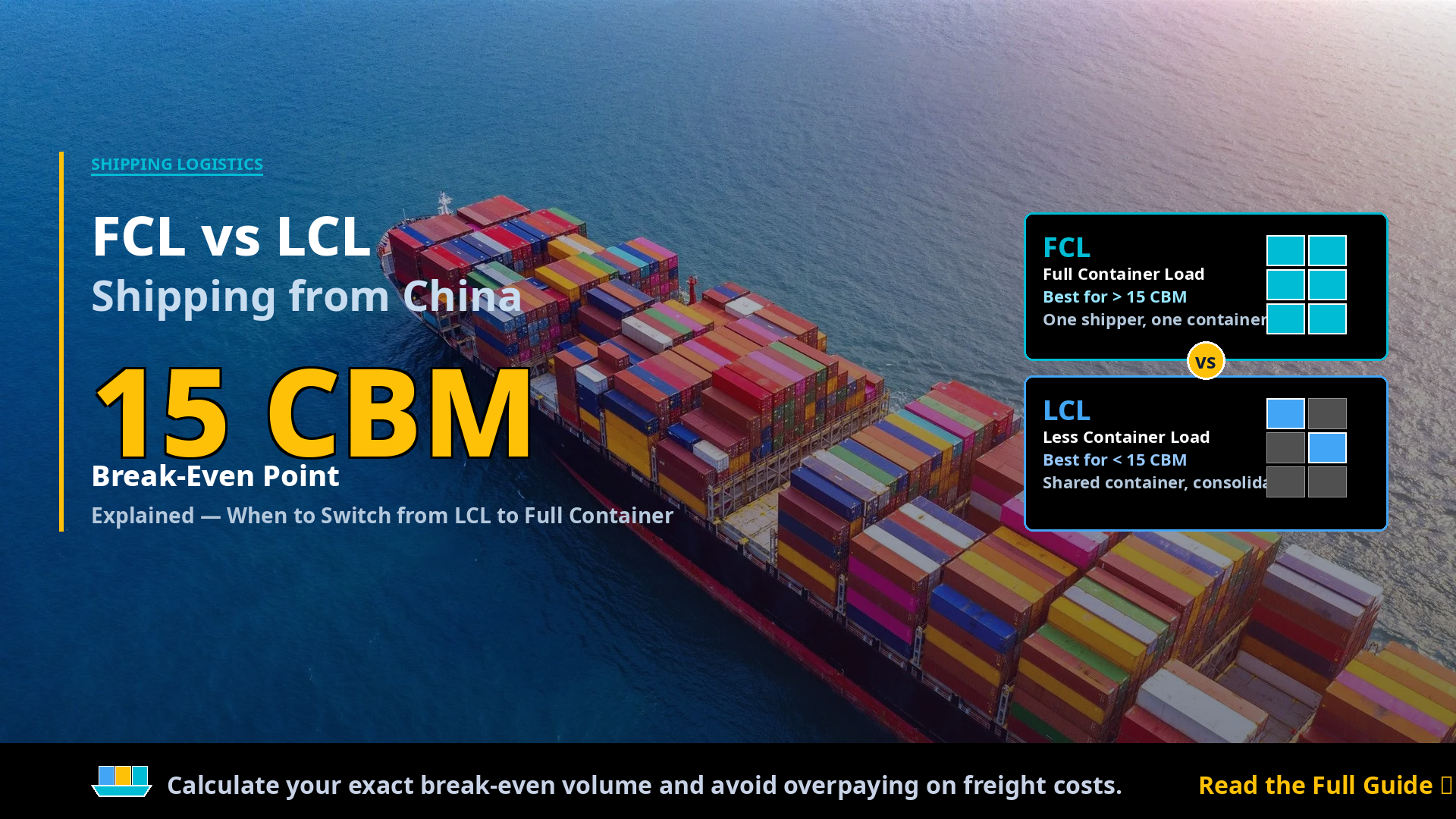
FCL vs LCL Shipping from China: The 15 CBM Break-Even Point Explained
Quick Answer (For Importers Sourcing From China) The 15 CBM rule: Below 15 CBM LCL is more cost-effective; above 15 CBM FCL wins. The 3 supply-chain checks for Middle East importers cover the consolidation pre-check. The full-service door-to-door export partner guide documents the FCL/LCL options. Request logistics quotes for both FCL and LCL on the same shipment. Decision rule: 20GP FCL = 28-30 CBM capacity; 40GP FCL = 58-60 CBM capacity. Most importers sourcing from China specify the shipping mode without understanding the 15 CBM break-even rule that determines the FCL vs LCL cost crossover. The result is a sourcing pattern where the importer pays the FCL premium for a 10 CBM shipment that would have been cheaper under LCL, or pays the LCL variable cost for a 25 CBM shipment that would hRead more